Marks
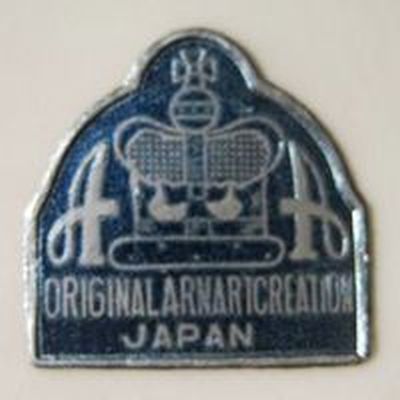
Image 0208-011-01-01
Closeup of the well-known sticker. The trademark was registered on 1953-04-30 and cancelled 2001-02-17.
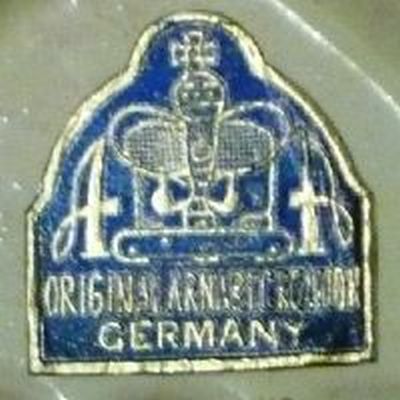
Image 0208-011-01-02
Another sticker closeup, note that it reads "Germany". This was only used 1956 on ceramics made by the Scheurich company.
(Picture: Cherri Copeland)
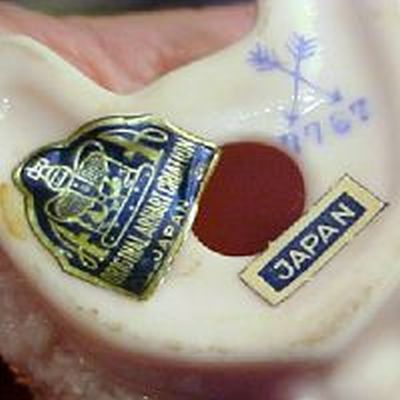
Image 0208-011-01-03
Crossed arrows with three feathers above a four-digit number.
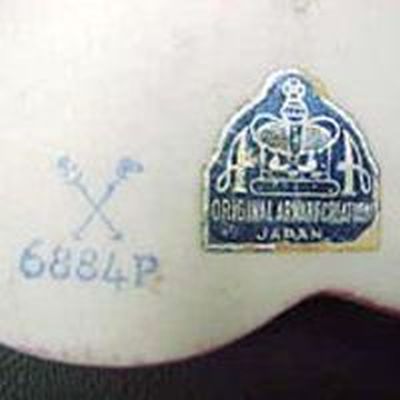
Image 0208-011-01-04
Crossed arrows with three feathers above a four-digit number trailed by a "P".
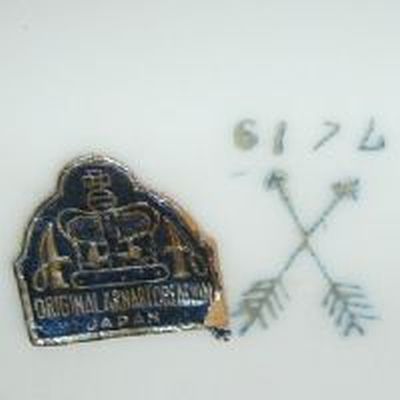
Image 0208-011-01-05
Many four-feathered versions were produced for HomCo but Arnart also had its fair share, like here on item '7419'.
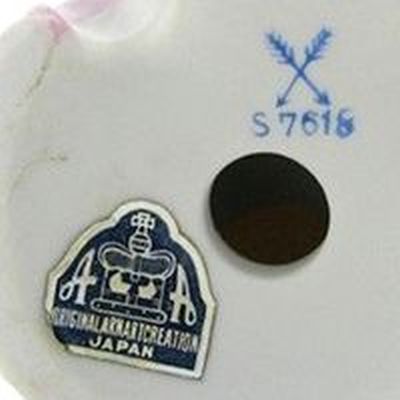
Image 0208-011-01-06
Crossed arrows with four feathers, here on "S7618" but that marking type should not be confused with ...
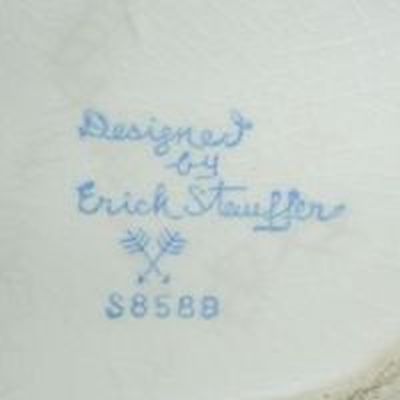
Image 0208-011-01-07
... marks on items designed by Erich Stauffer (which also carry a leading "S"), here with three feathers.
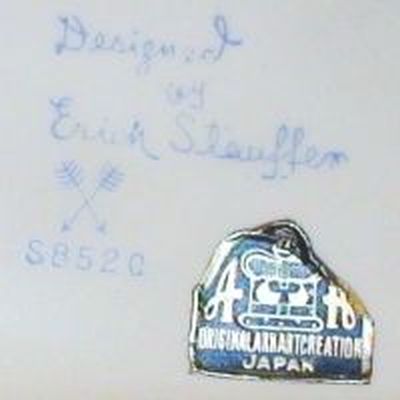
Image 0208-011-01-08
Others had four feathers and some had a totally different numbering ...
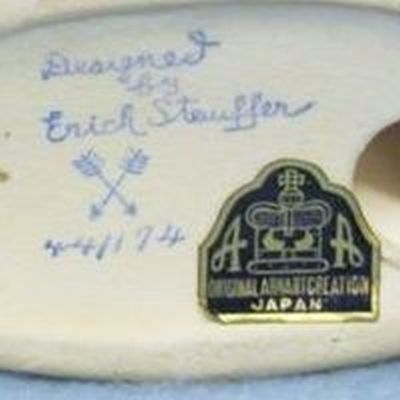
Image 0208-011-01-09
... as can be seen on this, also four-feathered, version.
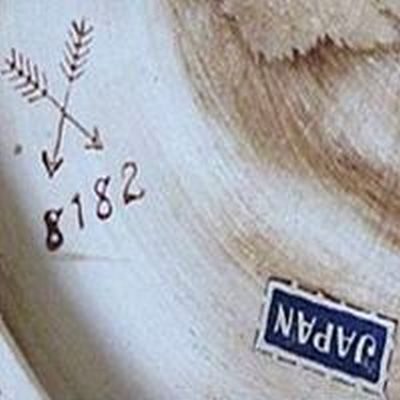
Image 0208-011-01-10
This five-feathered mark was found near an impressed "Designed by Erich Stauffer".
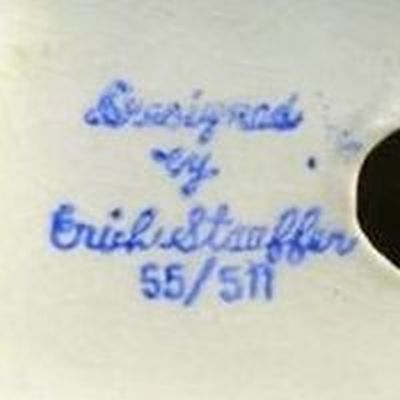
Image 0208-011-01-11
Other Stauffer designs have no crossed arrows at all.
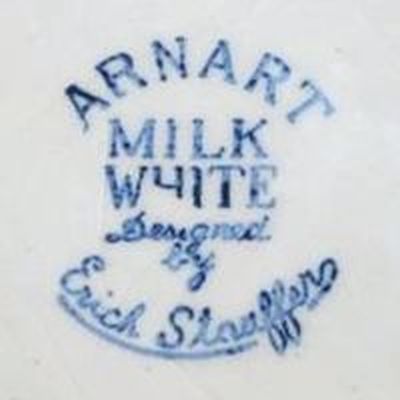
Image 0208-011-01-12
Finally, a "Designed by Erich Stauffer" on an item from the newer "Milk White" series.
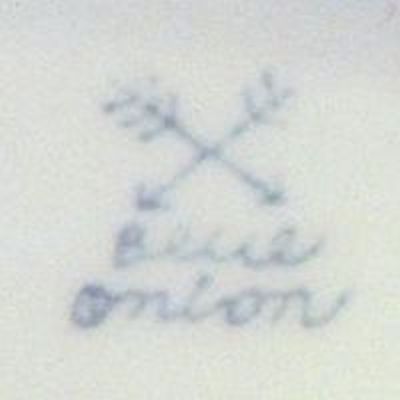
Image 0208-011-01-13
Arnart version of a "Blue Onion" mark.
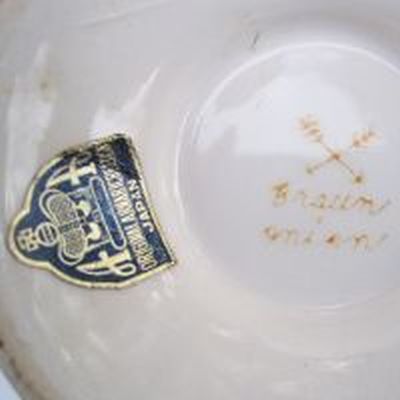
Image 0208-011-01-14
The brown edition was (peculiar enough) written in German: "Braun Onion".
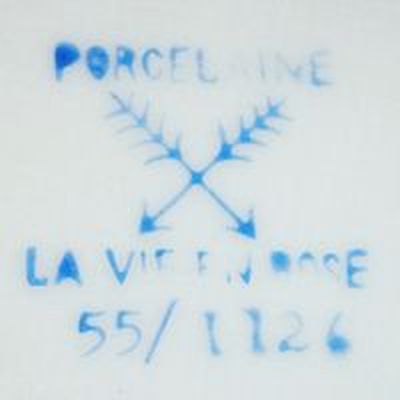
Image 0208-011-01-15
Crossed arrows were also used for the "Porcelaine" series, items of French-inspired design or depicting French scenes.
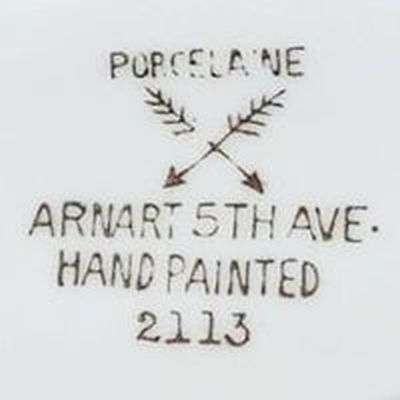
Image 0208-011-01-16
Same as before, but with early "Arnart 5th Ave." addition.
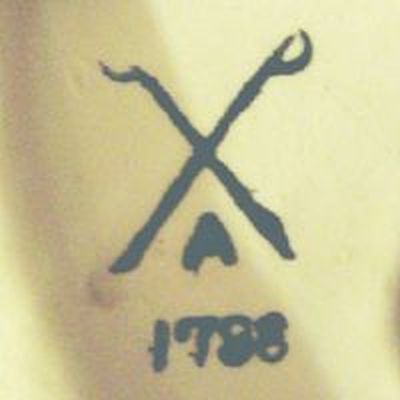
Image 0208-011-01-17
Crossed swords above a single "A" and the item number "1788".
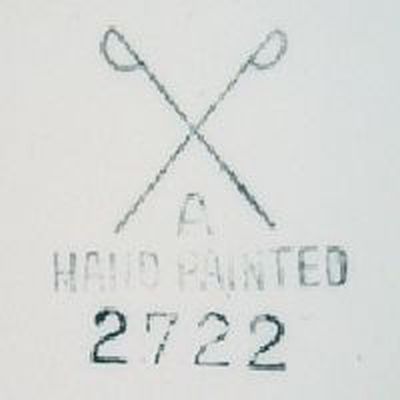
Image 0208-011-01-18
Crossed swords above a single "A", "hand painted" and the item number "2722".
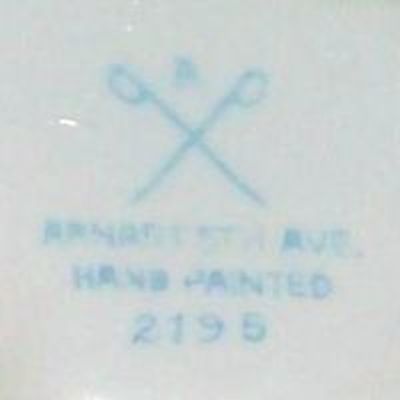
Image 0208-011-01-19
Single "A" above a set of crossed swords, that above "Arnart 5th Ave." and 'HAND PAINTED' and the item number '2195'.
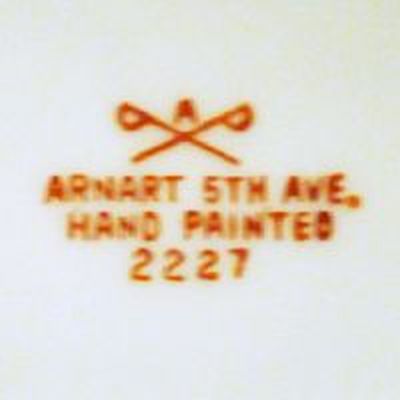
Image 0208-011-01-20
Single "A" above a set of crossed swords, that above "Arnart 5th Ave." and 'HAND PAINTED' and the item number '2227'.
(Picture: Thomas Maietta)
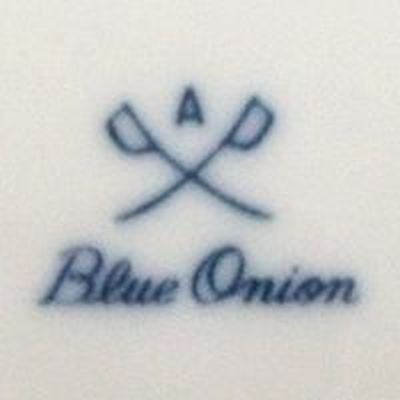
Image 0208-011-01-21
A single "A" above a set of crossed swords above "Blue Onion", found on an item with Arnart sticker.
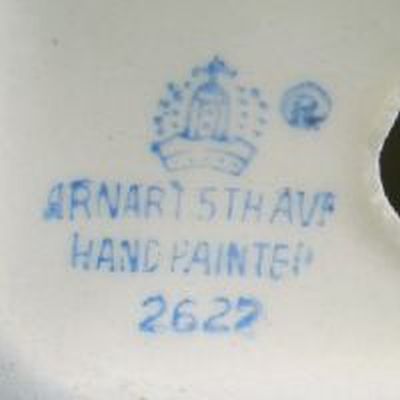
Image 0208-011-01-22
This is the basic "Arnart 5th Ave." mark registered 1957.
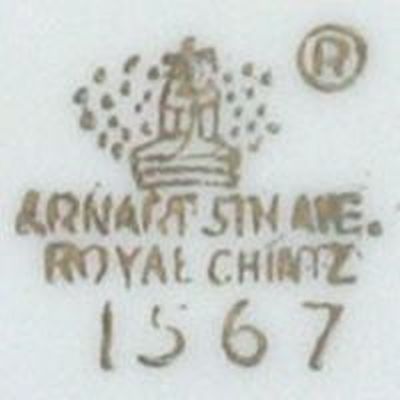
Image 0208-011-01-23
"Arnart 5th Ave." mark in the "Royal Chintz" version.
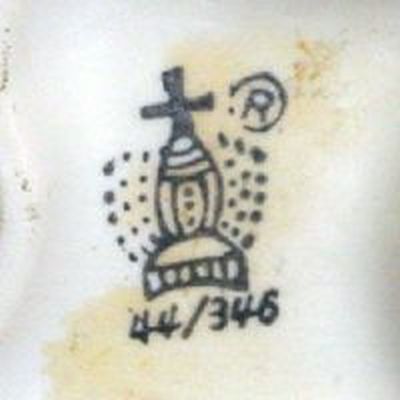
Image 0208-011-01-24
Original "Royal Crown" mark.
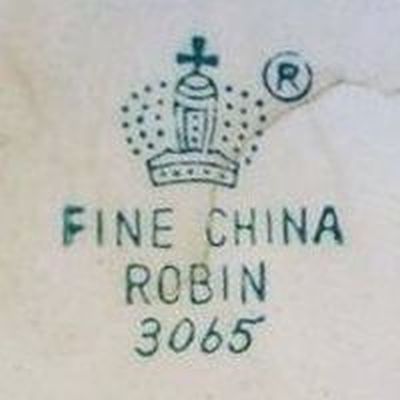
Image 0208-011-01-25
Original "Royal Crown" mark, here on the bird figure "Robin".
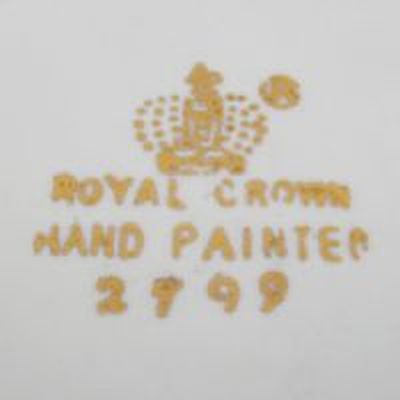
Image 0208-011-01-26
Here the better known version with crown above "Royal Crown" and "hand painted".
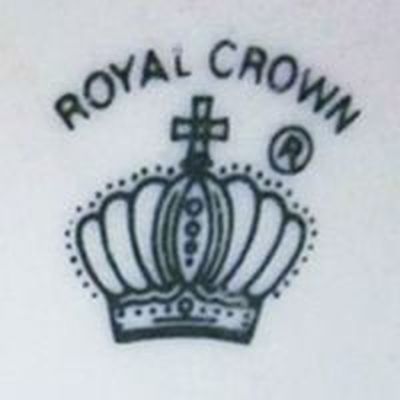
Image 0208-011-01-27
Elaborate "Royal Crown" mark from 1984, here on an item produced in Taiwan.
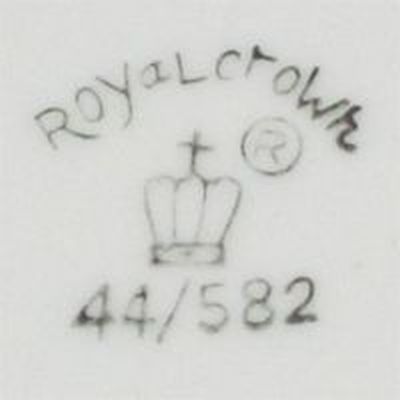
Image 0208-011-01-28
Simple "Royal Crown" mark from the 1980's.
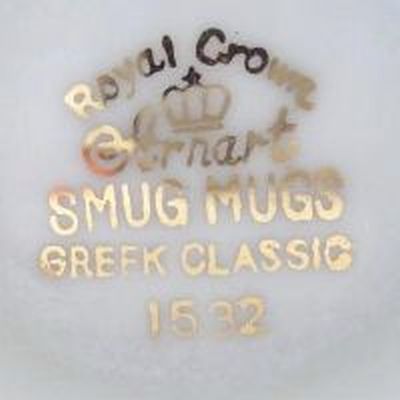
Image 0208-011-01-29
Simple "Royal Crown" mark, here on the "Smug Mugs" edition "Greek Classics".
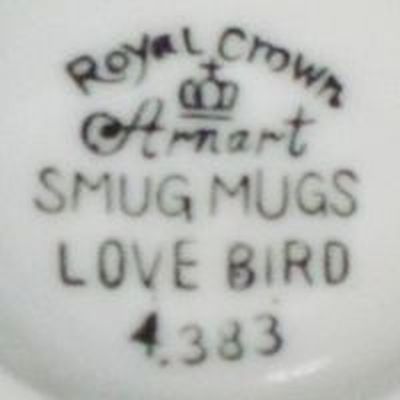
Image 0208-011-01-30
Simple "Royal Crown" mark, here on the "Smug Mugs" edition "Love Bird".
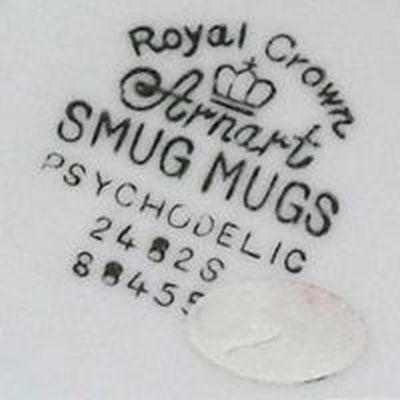
Image 0208-011-01-31
Simple "Royal Crown" mark, here on the "Smug Mugs" edition "Psychodelic". Note the extended item numbers.
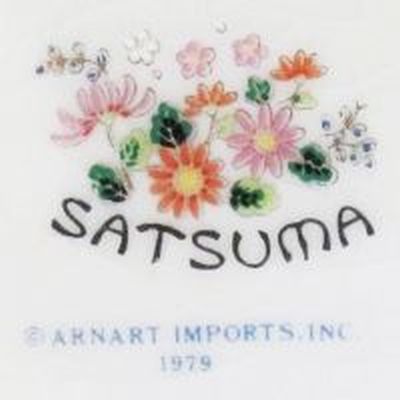
Image 0208-011-01-32
Arnart also had special marks for some series, here the "Satsuma" version.
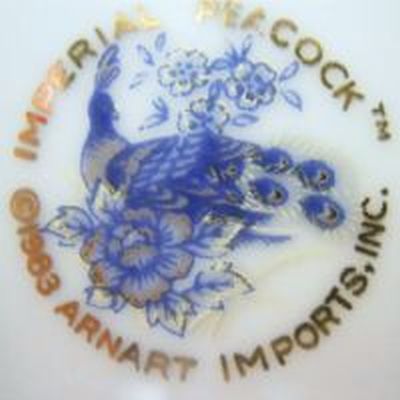
Image 0208-011-01-33
Mark of the "Imperial Peacock" series.
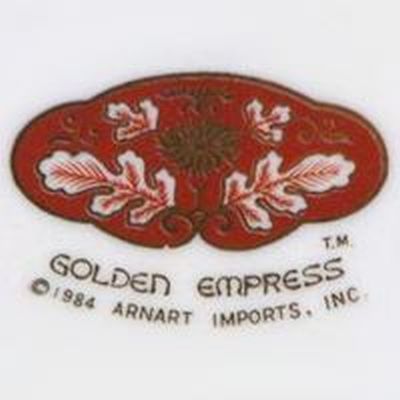
Image 0208-011-01-34
Mark of the "Golden Empress" series.
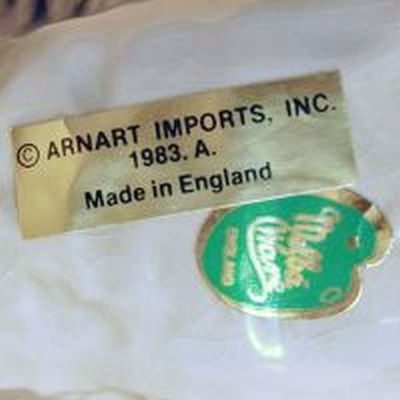
Image 0208-011-01-35
Sticker from 1983, here on "Melba Ware" from England.
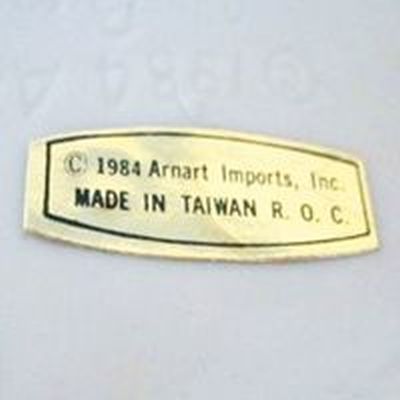
Image 0208-011-01-36
Sticker from 1984, here on an item made in Taiwan.
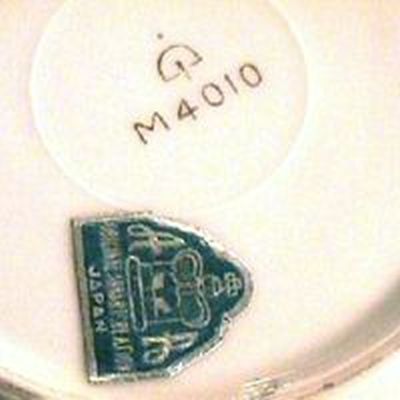
Image 0208-011-01-37
Another mini-beehive in gold, here on item number "M4010", with Arnart sticker.
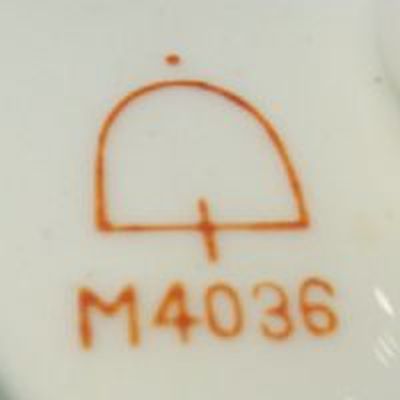
Image 0208-011-01-38
Another version, here in red on item number "M4036".
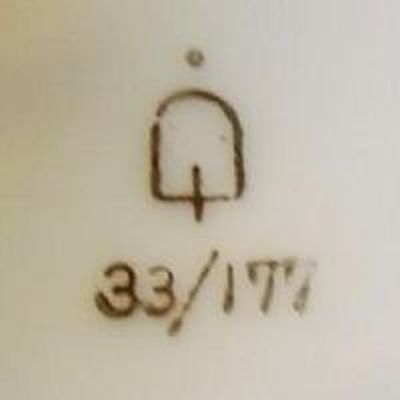
Image 0208-011-01-39
A mini-beehive in gold, here on item number "33/177".
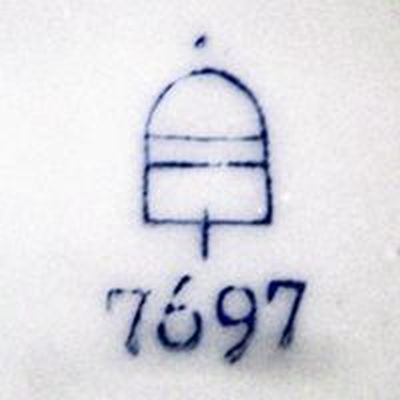
Image 0208-011-01-40
Arnart beehive mark (example on item "7697"), registered in Japan in December 1957 and cancelled 2001-02-17.

Image 0208-011-01-41
A few versions of the Arnart beehive mark included the small circled "R" for Registered Trademark.
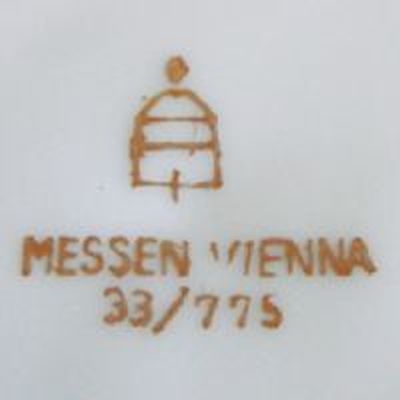
Image 0208-011-01-42
Arnart beehive mark, here on item "33/775". The "Messen Vienna" addition is utter nonsense.
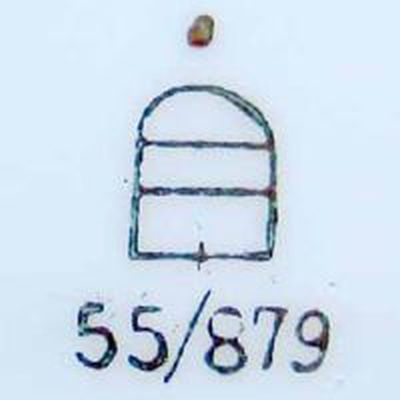
Image 0208-011-01-43
Arnart beehive mark, here on item "55/879".
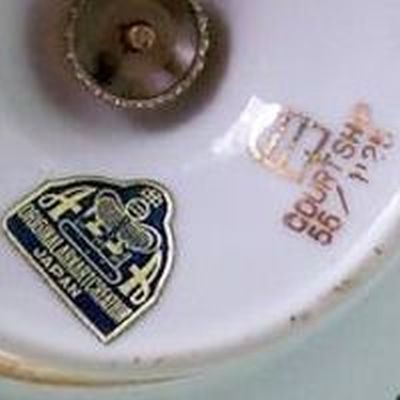
Image 0208-011-01-44
Arnart beehive mark, here on item "55/1125" which was titled "Courtship".

Image 0208-011-01-45
Arnart "K.P.M." mark, even Roentgen incorrectly lists this as German.
(Picture: eBay user joflora)
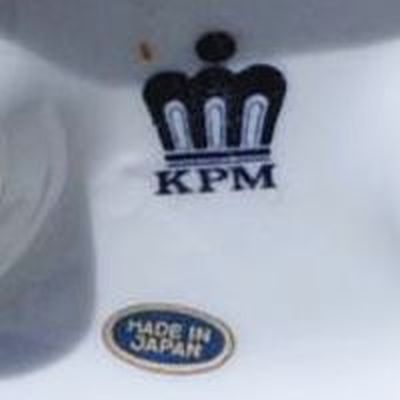
Image 0208-011-01-46
Arnart "K.P.M." mark, here with "Made in Japan" sticker.
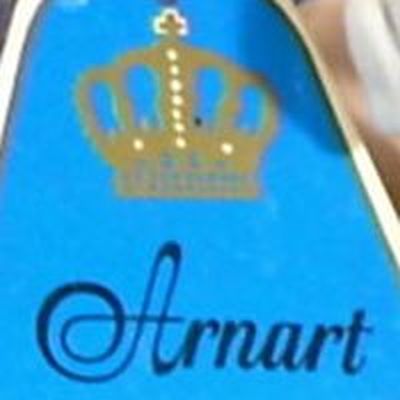
Image 0208-011-01-47
A version of the "Royal Crown" mark as it can be found on cardboard tags accompaning the KPM marked items.
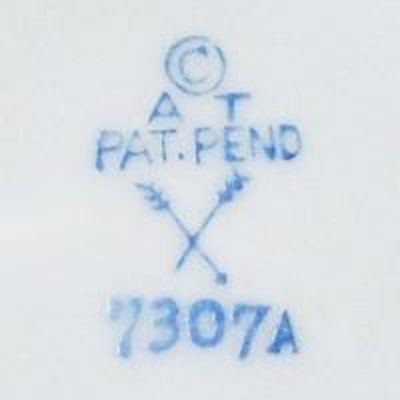
Image 0208-011-01-48
Claimed to be an Arnart mark, the "© A T" is claimed to stand for "Arnart Trading".
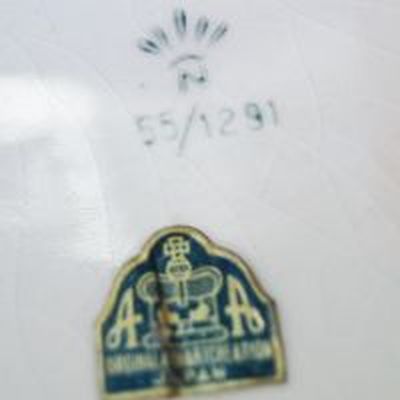
Image 0208-011-01-49
Arnart's own version of the crowned N mark, here on item "55/1291".
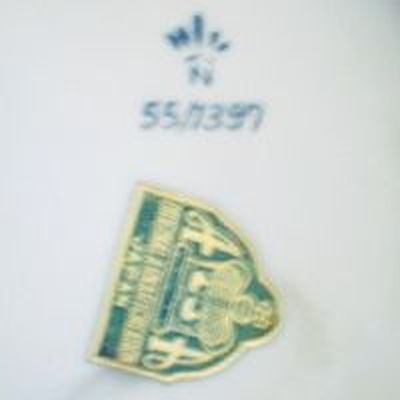
Image 0208-011-01-50
Arnart's own version of the crowned N mark, here on item "55/1397".