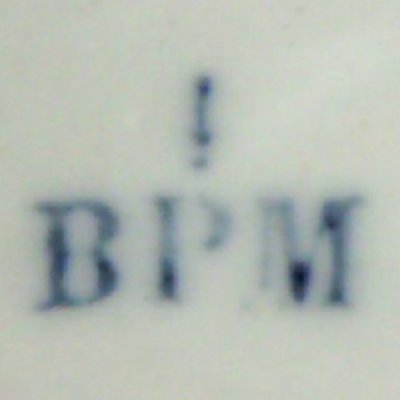
Image 0110-003-01-01
Used until around 1849.
Around 1756, a faience and stoneware factory was founded in Magdeburg, and its success may have inspired other businesspeople, such as Paul Müller, who founded his small firm just outside Buckau in 1833. However, in 1838, Müller sold his small firm to the printer Falkenberg and the lithography specialist Rieß, who bought more land in the Feldmark area that same year. This was located just outside the old Magdeburg fortifications, right between the River Elbe and the newly built Magdeburg–Halle–Leipzig railway station.
Some people may now be wondering about the many different dates given for the founding of the factory. The factory was founded and registered by Falkenberg and Rieß in 1838 and opened in 1839, but as they had previously purchased the small business from Müller, these further purchases were counted as extensions of that business. Thus, the founding date officially became 1833, a date which was later even issued on self-produced presentation items.
Both quality and artistic standards quickly rose to a very high level, meaning that all employees had to be highly skilled professionals. For example, Jakob Uffrecht, who worked as a modeller between 1843 and 1845, went on to found his own company: the well-known Siderolith- und Steingutfabrik J. Uffrecht (later Carstens-Uffrecht), located in Neuhaldensleben (later incorporated into Haldensleben). W. Hermann Kupfer, manager from 1843 to 1851, became one of the founders of Kupfer & Koch in Magdeburg, while factory manager and director Heinrich Witte, employed from 1849 to 1862, was able to easily transition to the ducal porcelain manufacture of Fürstenberg, taking over production there in 1862.
Many designs produced in Buckau were created by artists such as Friedrich Maximilian von Heider (also known as Fritz von Heider), a renowned painter, designer, and ceramics artist. He was a teacher at the Kunstgewerbe- und Handwerkerschule in Magdeburg and later collaborated with artists like Rudolf Bosselt and Hermann Muthesius (the latter being the founder of the Deutscher Werkbund).
Initially, the company specialised in household goods such as washing sets and standard tableware, but it soon started manufacturing finer coffee and tea sets, hotel porcelain, and restaurant ware. During the early years, the influence of items and series made by Johann Gottlob Nathusius (Althaldensleben) and F.A.Schumann (Berlin-Moabit) can still be recognised. However, over time, the Buckau factory slowly but surely found its own line, winning its first silver medal at the industry and trade fair in Wittenberg in 1869. By 1893, the company had won two gold medals, one in Magdeburg and another at the Hamburg-Altona exhibition in Lower Saxony. By constantly refining their items, the company finally presented its first completely original design. The typical Buckau mould was an instant success, winning the silver medal at the 1904 World Exhibition in St. Louis, USA.
Although little is known about the following years, the Handbuch der Keramikindustrie lists the company in 1913, stating that the Buckauer Porzellanmanufactur Akt.-Ges. employed 200 people - the largest number of employees the business ever had. However, due to changing design influences, the company's success became increasingly unpredictable, and in 1916, the main production moved to premises in Arneburg on the River Elbe. Both production numbers and overall quality declined from around 1926 onward; the factory finally closed in 1930. While some sources indicate that the closure was a direct result of the world financial crisis, others clearly state that the factory had already been doomed long before that.
On 1946-10-22, businessman Ernst Linder registered a new firm in the Magdeburg city trade register. This was not related to the previous BPM and only existed for a short period before disappearing from the register again. It is unclear whether this business used a mark, or which one it might have used.
Image 0110-003-01-01
Used until around 1849.
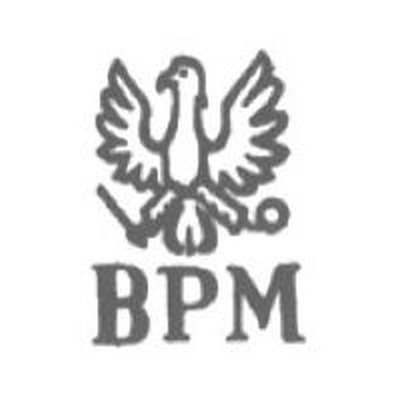
Image 0110-003-01-01
Used from around 1849 until around 1874.
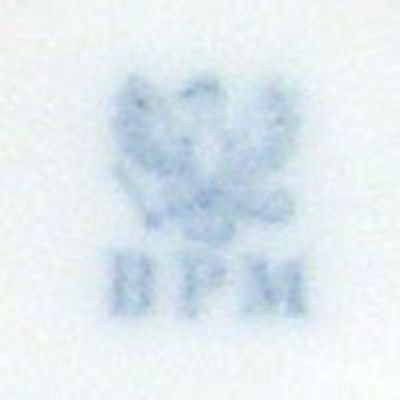
Image 0110-003-01-01
Slightly blurry example of the first eagle mark.
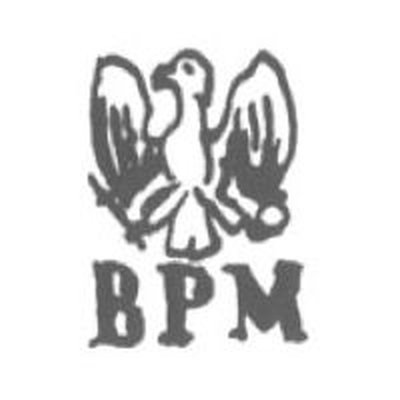
Image 0110-003-01-01
Used from around 1849 until around 1874.
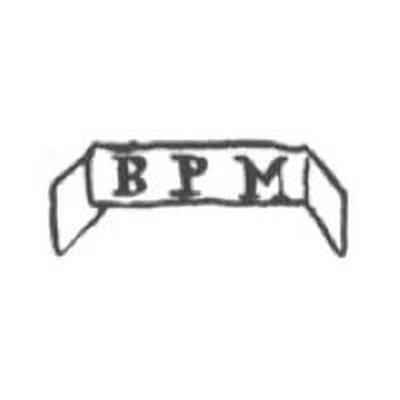
Image 0110-003-01-01
Used from around 1859/1860 onwards until 1929.
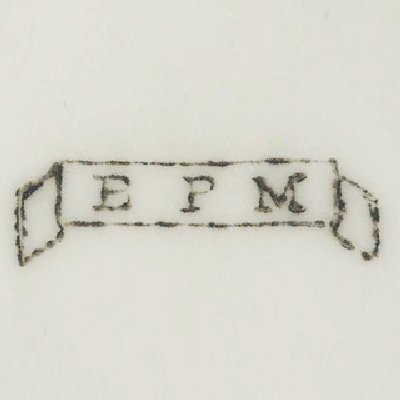
Image 0110-003-01-01
Used from around 1859/1860 onwards until 1929.